The two Karikala class were almost obsolete as soon as they were laid down. The speed of the building of the Dreadnought and Invincible left many ships looking very second hand before they were completed. The worlds navies were going through the 'semi' phase where the main armament would be 2 to 4 large guns and a larger amount of intermediate guns. The largest pre-Dreadnoughts had 4x12" and 10x10"-9.2" guns. Those ships did not last long in service. Most had triple expansion engines which was another strike against them. The Karikala was a semi-armoured cruiser with four main guns and lots of 6" secondaries. The 6" was chosen that the shell splashes would be distinguishable at longer firing ranges. The two ships were laid down in 1906 with completion set for 1910. The completion of the Invincible in 1908 slowed the production of the two Karikala class so that the building of the Andrianerinerina could take precedence. The two were completed in 1911.
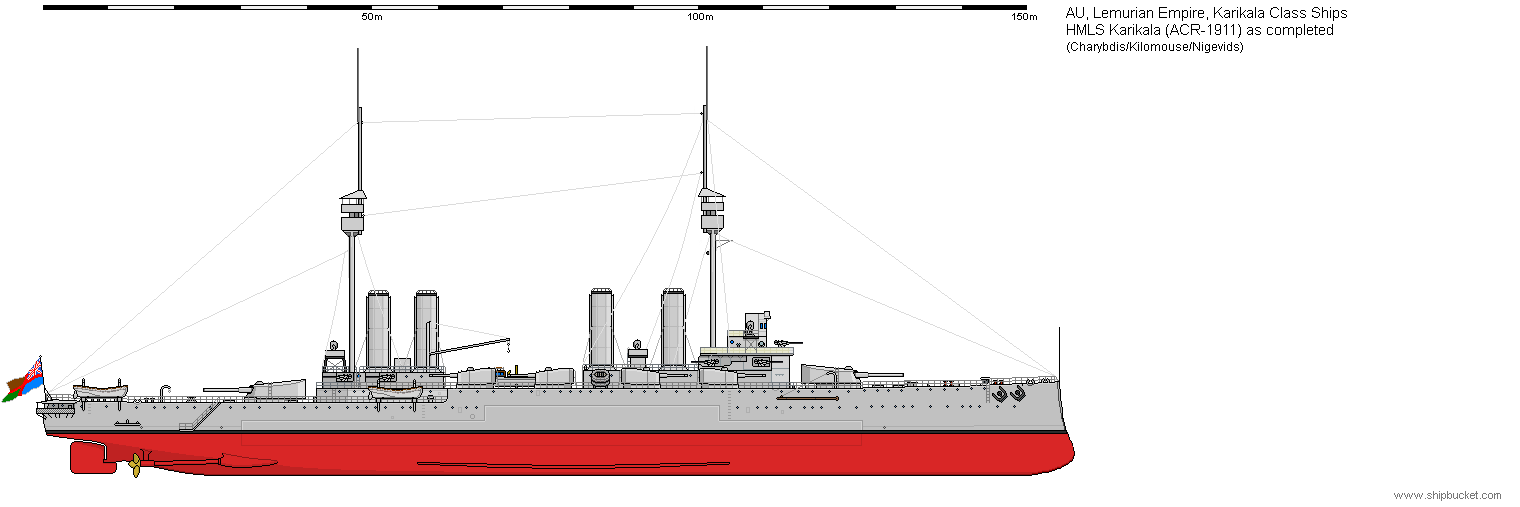
The two ships main claim to fame was being two of the first ships in Lemurian service fitted with turbine engines. This made a big plus to the ships future usage. On completion the two ships were part of the 1st cruiser squadron. In reality the two ships were allocated to Main Fleet North, overseeing the Palk Strait and Main Fleet South looking after the Mozambique channel. Except for the service in World War One the two ships spent all their careers in those positions, even after conversion.
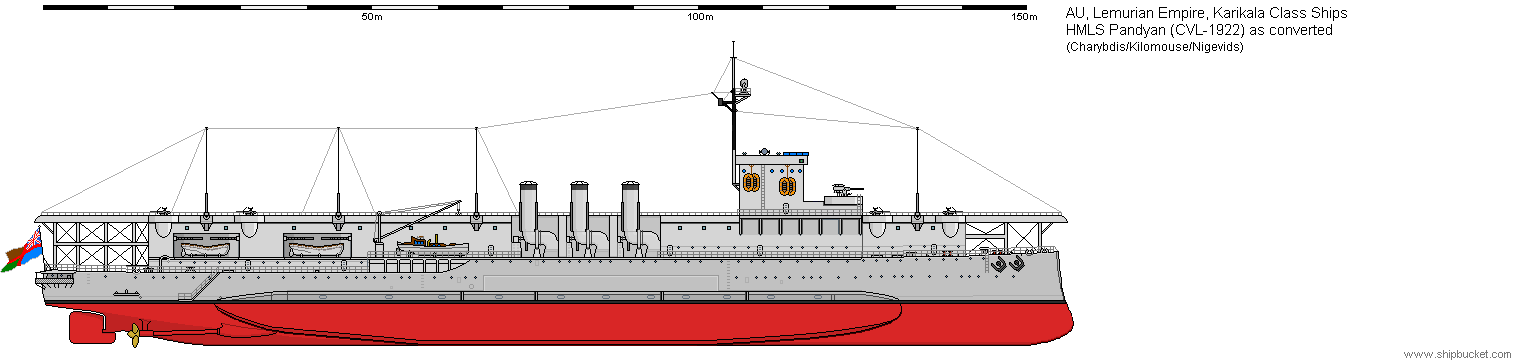
The Karikala was recalled to the Colombo Dockyards in early 1917 to act as Lemuria's trials ship for aircraft landing on and off. Six months of trials proved the concept and it was decided that both the Karikala and Pandyan
would be converted to aircraft carriers. As can be seen from the drawing many innovations were tried on the ships to keep the exhaust smoke away from the landing deck, which included the three funnel, nifty, way of lowering the funnels out over the side of the ship. Which while it worked well took too long to raise and lower, and they could not be lowered during heavy weather. With all the extra weight up high the two ships were fitted with bulges to help preserve stability.
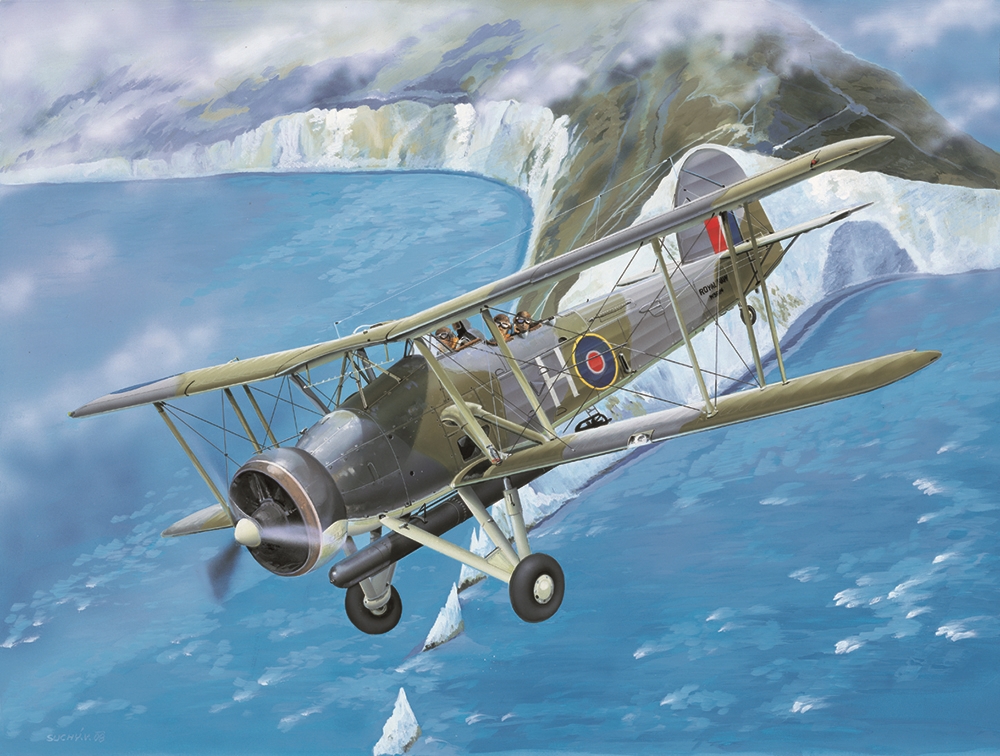
The Fairey Swordfish was the bomber aircraft that helped to sink the converted battleship Tirpitz, along with the Queen Rangita and Andrianerinerina. The eighteen aircraft aboard the ships at wars start were twelve Swordfish bombers and six Griffon fighters. More than enough to cover the two choke points into the Lemurian Inland Sea. They also acted as the training carriers for the fleet. In that role they were of incalculable value. One of the pair was lost when a Japanese submarine penetrated the inland sea finding the Pandyan offshore in training mode. Hit with three torpedoes, the bulges did not save it. The ship rolled onto its beam ends and sank.
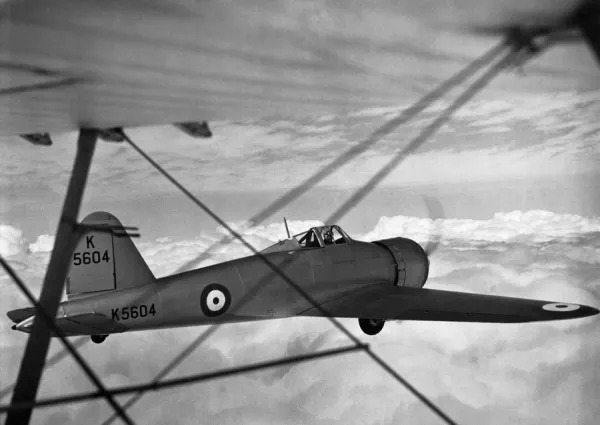
Griffon fighter as seen from one of the Swordfish aircraft it is escorting.